Posted: Thursday 15 November 2012
-
3 comment(s)
[ Comment ]
-
0 trackback(s)
[ Trackback ]
While we were in the Highlands we decided that we should spend an evening in the Enchanted Forest which takes place at Faskally Wood near Pitlochry during the month of October. The Enchanted Forest is an award winning spectacular outdoor sound and light show. The theme on the 10th Anniversary this year was "Flow". 
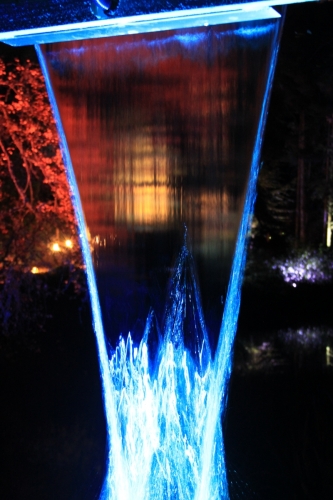
It really is a visual treat and the dramatic original music score simply added to the atmospheric setting of the autumn woodland environment. Using the forest as a natural backdrop allows visitors to experience a show that is breathtakingly beautiful, innovative and illustrates perfectly the theme as visitors make their way around the forest. 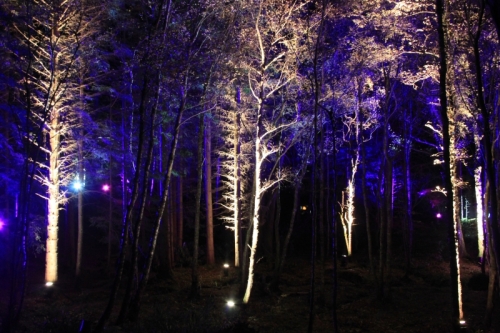
We enjoyed wandering around a couple of times, stopping off at the drinks station for mulled wine and hot chocolate en route, making sure we didn't miss any of the stunning sights and sound effects. 

Don't miss visiting the Enchanted Forest if you are in the area at this time of year. It is a wonderful experience for young and old alike. Long may it continue.
|
Posted: Monday 12 November 2012
-
3 comment(s)
[ Comment ]
-
0 trackback(s)
[ Trackback ]
I very rarely visit the Highlands without taking a trip to one of my favourite places. I've been a regular visitor to Loch an Eilein since early childhood. This spectacular wee loch surrounded by magnificent pine trees, with a backdrop of rugged mountain peaks, is on the Rothiemurchus estate and lies about 5km south of Aviemore. The name Loch an Eilein comes from the gaelic 'loch of the island'. 

I can't begin to count the number of times I have walked around the loch. There is a fantastic trail that is suitable for all ages and stages. Infact you can enjoy some of the best low level walking in Scotland here. It's also a great route for mountain bikers. A circuit of the loch will take you a couple of hours at a leisurely pace. Make sure you stop to look for local wildlife including red squirrels, roe deer, Scottish crossbills and maybe an elusive osprey, if you're lucky. 
In the middle of the loch sits the dramatic and mysterious ruins of a castle. The castle was once a stronghold of the Wolf of Badenoch, renowned for being one of the most barbaric and evil characters in Scottish history, who died around the turn of the 15th century. The Jacobites, retreating from Cromdale in 1690, besieged the castle, led by Dame Grizel Mor Grant, widow of the fifth laird Grant. At this time the castle was connected to the shore by a causeway. The causeway was lost when the water level in the loch was raised in the 18th century. You can wander down to the shore opposite the castle and test the unique triple echo, by shouting and hear your voice bounce off the ruins of the castle to the hills. It really does work! 
Loch An Eilien was voted Britain's Best Picnic Spot in 2010 and it's no surprise. The views are breathtaking and the peaceful atmosphere makes it the perfect place to enjoy nature at it's very best. Another plus is that it is very rarley too busy so you are always able to enjoy this special place without the crowds. 
A wonderful time spent at one of my favourite places. 
|
Posted: Thursday 8 November 2012
-
3 comment(s)
[ Comment ]
-
0 trackback(s)
[ Trackback ]
The Highland village of Newtonmore holds a special place in my heart because it's where I was brought up. I spent a happy childhood exploring this beautiful and peaceful part of the world and I try to get back for visits as often as I can. It's my retreat when I want to get away from the hustle and bustle of city life. When I'm in Newtonmore I enjoy nothing more than getting out into the great outdoors for long walks, taking in the breathtaking panaoramas that greet me on all sides of the valley. Newtonmore is gateway to the Cairngorms National Park. 
My friends and I always enjoy walking the Wildcat Trail, a 10km route which surrounds Newtonmore taking in all the spectacular scenery this area has to offer including wooded glens, gushing rivers, heather-clad moorland, tumbling waterfalls and an array of flora and fauna. Look out for shy wildlife too. On this occasion we saw red squirrels and birds of prey. The trail can be enjoyed as a complete circuit or you can just do sections of it if you prefer as there are various paths linking the trail to different start points in the village. 

The really fun part for children and adults alike is spotting the colourfully decorated wildcats which are hidden along the route, numbering more than 100. You can pick up your Wildcat Experience Track Pack at the Wildcat Centre in the middle of the village and as you head off in search of the wildcats make sure you mark each one's location as you identify it, bring your map back to the centre for verification and claim your certificate or prize! Believe it or not the Scottish Wildcat is more at risk of extinction than the Amur (Siberian) tiger. 
I almost never visit Newtonmore without walking up to Glen Banchor which is a beautiful, wild wee glen situated just behind the village. Within 15 minutes walk of the village you can be roaming the surrounding hills and strolling along the banks of the River Calder, which flows down the valley of the glen into the River Spey. The area provides excellent hill walking opportunities and offers access to several Monadh Liath Munros. This area featured in the highly successful BBC drama series "Monarch of the Glen", as part of the fictional Glen Bogle estate.
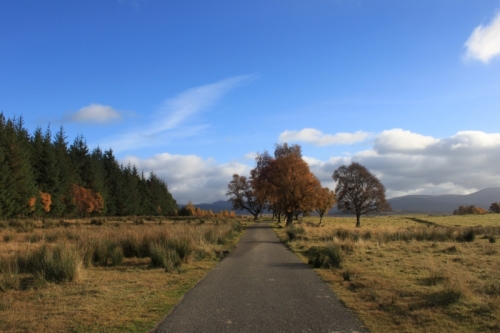

It is one of my favourite places and as a child I spent long, lazy summer days swimming in the river and having picnics with family and friends. 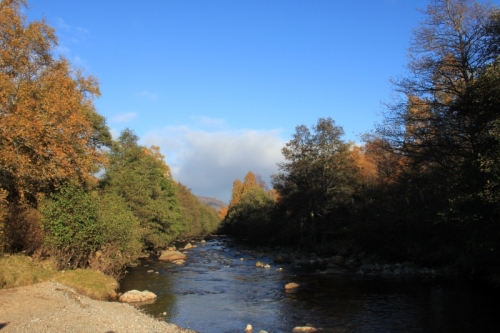

Tune into my next blog when I'll tell you about another one of my favourite walks in the area.
|
Posted: Wednesday 7 November 2012
-
5 comment(s)
[ Comment ]
-
0 trackback(s)
[ Trackback ]
Autumn is probably my favourite time of year in Scotland, when the whole countryside seems covered in a carpet of rich, earthy colours. While staying in Comrie in Perthshire with friends we decided to spend the afternoon at Drummond Castle Gardens. These gardens came highly recommended by friends who had been before so we didn't want to miss the opportunity to visit while we were in the area. The approach to the castle and gardens is impressive, up a magnificent avenue of beech trees bursting with autumnal colours and surrounded by stunning countryside. 
Drummond Castle, which is not open to the public, lies 2 kms North of Muthill and was built in 1491 by Sir John Drummond. The Castle is most famous for it's wonderfully laid out eclectic formal gardens, one of the finest formal gardens in Europe which were originally laid out in 1630 by John Drummond, 2nd Earl of Perth. 
The gardens are Italianised and adorned with a number of fine statues, however, the central structural feature of the parterre is a St Andrew's cross. 
It's not until you cross the courtyard of the castle and step out onto the grand terrace that you can gaze onto the gardens in all their symmetrical glory. We thorougly enjoyed wandering around these peaceful, visually spectacular gardens and would love to return in the spring. 


Here's a fun fact for you - The buildings and gardens of Drummond Castle featured as backdrops in the 1995 film Rob Roy.
|
Posted: Thursday 1 November 2012
-
5 comment(s)
[ Comment ]
-
0 trackback(s)
[ Trackback ]
Recently I spent a lovely few days in the pretty conservation village of Comrie which is in the heart of scenic western Strathearn and where the Scottish Highlands truly begin. Situated at the meeting of Glens Lednock and Artney within the Strathearn area this idyllic place is perfect for those who enjoy the great outdoors. My friends and I rented a beautiful house (Glenbuckie House) right in the middle of the village so it was ideal for stepping right out the door and into the glorious Comrie countryside. 
We were keen to explore some of the numerous walks that are in the area and were fortunate to be blessed with mild, bright and most importantly, dry autumnal weather. My favourite was probably the Glen Lednock, a 4 mile circular walk taking in some breathtaking scenery. Off we set on the path which follows a route along both banks of the River Lednock and then gently climbs up behind Comrie through oak and beech woodland, spectacular colours abound at this time of year and we were encircled by rich earthy colours. 

Further up the path starts to climb more steeply finally arriving at a sign post to the right for the Wee Cauldron. A railed way leads steeply and safely downwards into the Glen for a fantastic view of the fast-flowing river, hurtling white-topped and streaked with peat stain into a very deep dark basin. Continuing the excellent hiking trail we reached the Deil's Cauldron which means the 'Devil's Kettle', an apt name for this hollow in the gorge where the river has cut a narrow passage. 
Comrie is often referred to as the Shakin' Toon because of the number of small earth tremors it has experienced. It lies on the Highland Boundary Fault, a major fault line which runs right across Scotland from Grampian to Argyll. In 1874 the curious Earthquake House was built on solid rock in the middle of a field to house a primative seismometer to monitor the tremors. A more modern device has now been installed and this can be viewed through a window and there are also information panels outside which provide you with some of the history. 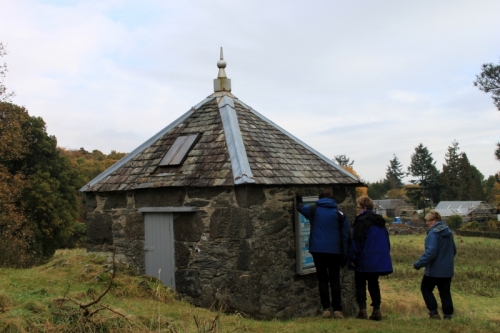
Tune into my next blog and I'll tell you about my visit to one of the finest formal gardens in Europe, strangely enough only a few miles down the road from Comrie!
|
Posted: Thursday 14 June 2012
-
3 comment(s)
[ Comment ]
-
0 trackback(s)
[ Trackback ]
Westray is brimming with curious wildlife. We were very excited about seeing puffins and planned to head to Castle o' Burrian to hopefully get up close and personal with our little feathered friends. Castle o' Burrian is known as the best place in Orkney to view puffins and is easily accessible. Here you can get so close to the puffins that you can almost reach out and touch them. A 10 minute walk from the road leads you to the rock stack which rises impressively up from the sea and is home to as many as 300 birds. They are only there between April and July so time-wise we had pitched it perfectly and were pretty confident we would see some. A good time to view them is after 9.30pm when they are returning to their nests from a day out at sea. We were absolutely delighted to watch these interesting and intriguing wee birds. 
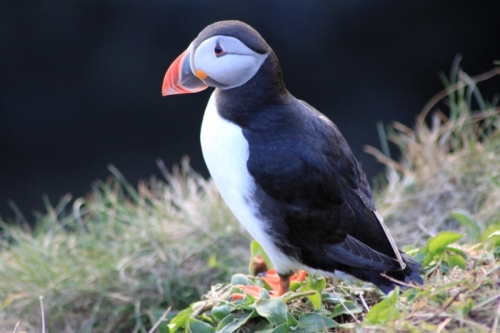
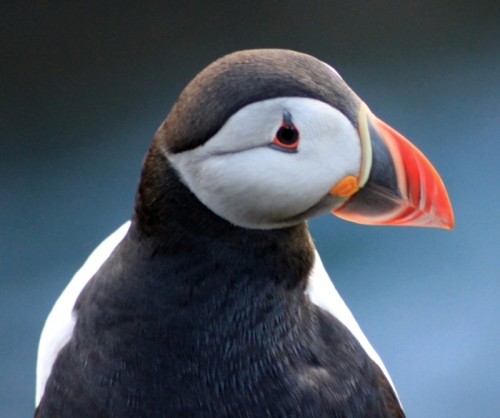
We were also keen to find seals and our friends had told us that a good place to spot them was at Rackwick Bay. As it was a gloriously sunny day we decided to have a picnic on Grobust beach first. We set out from Pierowall and followed the main road before veering off through fields and along farm tracks. After climbing a few fences we reached a large area of wind blown sand covered in short turf. Also known as links or machair it bursts into colour with wild flowers in the summer. Once over the sand dunes we found ourselves to be the only people on the most spectacular beach. The Atlantic waves crashed onto the shore as we sat in the sun eating our lunch. 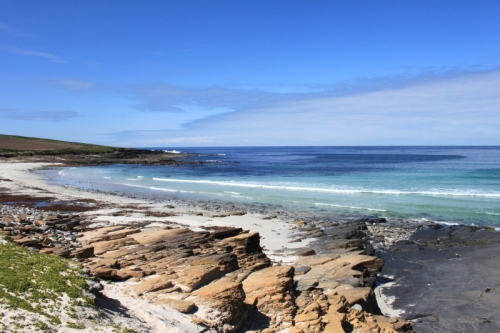


A lone seal came in close to the shore to check us out. This spurred us on to head to Rackwick Bay to see if we could spot some others. When we reached the bay, low and behold, a plethora of curious seals were basking on rocks in the sun. 


Hope you enjoyed meeting a few of Westray's residents  . .
|
Posted: Tuesday 12 June 2012
-
3 comment(s)
[ Comment ]
-
0 trackback(s)
[ Trackback ]
Pierowall is the main settlement and harbour on Westray. The pretty village is positioned around a natural harbour, has lots of character and very friendly locals. If you are lucky enough to visit Westray you can be assured that after a couple of days you will feel like a true local. The people are just so welcoming. 

Westary has many new builds on the island but I prefer the old stone cottages with the flagstone roofs. Sadly the majority of these unique houses now lie in ruins, scattered around the island. Close to where we were staying is an entire "abandoned village", Nether House. So sad that many of these places are no longer family homes. 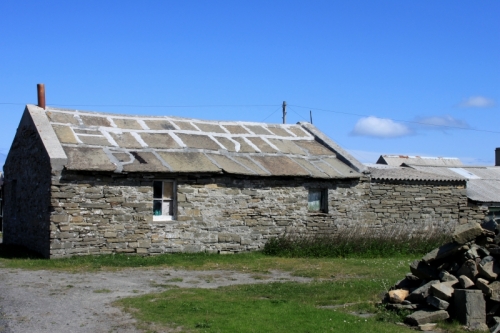
The village has two general stores, both well-stocked with a variety of wierd and wonderful goods. There is also a pottery, a knitwear and gift shop where two local woman create beautiful, original knitwear on the premises, an interesting art gallery, a cafe and my personal favourite by far...a family run fresh fish outlet. We were fortunate enough to be given a quick tour around by Kevin, the owner. All the fish is hand filleted and cured on the premises and tastes delicious. We were regular customers during our week on the island and sampled delicious hot smoked salmon, monkfish, halibut, haddock and the most amazing scallops...ever. On Wednesdays and Saturdays you can buy takeaway Fish and Chips. We did and they were yummy. 
Pierowall is home to the Heritage Centre which gives a fascinating insight into many aspects of Westray's past and present. We were very excited about seeing the "Westray Wife", Scotland's earliest representation of a human ever found. This small neolithic sandstone carving was discovered nearby in 2009 and is believed to be around 5000 years old. 
Boasting a scenic shoreside setting are the remains of Lady Kirk, also known as St Mary's. The south wall of the church dates back to the 13th century, but the majority of the building dates from a reconstruction in 1674. The ruins house two impressive 17th century tombstones. 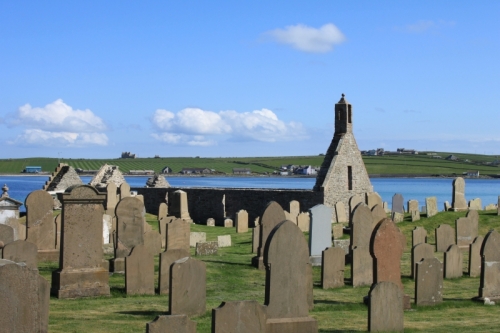
Just behind the village sits the impressive 16th century Noltland Castle, a fine, ruined Z-plan fortress which was never completed. The castle was built for Gilbert Balfour after he acquired the land in 1560 and is remarkable for its large number of gun loops and impressive staircase. We loved spending time exploring this amazing structure and climbed the tower to get great views of the surrounding area. 

Tune in to my next blog and get acquainted with some of Westray's curious wildlife  . .
|
Posted: Monday 11 June 2012
-
3 comment(s)
[ Comment ]
-
0 trackback(s)
[ Trackback ]
Westray is the perfect place to enjoy nature at its best and we were keen to experience all the outdoors had to offer. We set off for Noup Head Lighthouse which lies on the north west headland of the island. The lighthouse which sits on the edge of sheer cliffs was constructed by David A Stevenson in 1898, the last of the ‘Lighthouse Stevensons’ and first cousin of Robert Louis. The tower is 24m high and the light flashes every 30 seconds. The light was automated in 1964 and solar power replaced gas in 2001. 
We planned to follow the coastline for 6 miles, hoping to see lots of seabirds and wild flowers along the way. The cliff ledges are jam-packed with seabirds from May to July when they take up their nesting positions. The cliff tops make fantastic vantage points for viewing huge natural arches, wave-lashed rock slabs and the bird colonies, however, you have to be extremely careful as these cliffs are very dangerous. We saw lots of fulmars, kittiwakes, guillemots, oyster-catchers, razorbills and even a few puffins dotted around. We sat on the edge of a cliff by one of the larger "seabird cities" having our lunch in the sun and watching the antics of the locals. Bliss . 
We came across this beautiful hatched egg lying on the cliff edge. It looks like a work of art. Not sure which bird laid this so if anyone knows and can let me know I'd apprecaite it. 
Did I mention that this part of the island is very remote? We didn't encounter another person for the entire day. Just us and the most wonderful scenery and birdlife. To me this is an experience that money just can't buy. Did I also mention that we managed to climb Fitty Hill by mistake? A slight misinterpretation of one of the sign posts resulted in us reaching the highest point on the island...unintentionally. We weren't disappointed though because we'd planned to climb the hill later in the week and the views from the top were magnificent. 
All in all a fabulous day out on a fabulous section of Westray's coast .

In my next blog I'll introduce you to Westray's only village, Pierowall. It's a happening wee place.
|
Posted: Friday 8 June 2012
-
2 comment(s)
[ Comment ]
-
0 trackback(s)
[ Trackback ]
And so...we arrive on Westray, the most north-westerly of the Orkney Islands. Westray, often described as 'The Queen of the Isles', is the second largest of the North Isles and in many ways is a miniature Orkney. Wow, what an amazing wee island. One of Orkney's most prosperous isles, the island is known for its fertile farming lands and fishing fleet. Beautiful in every way and with some of the friendliest people we've ever met. It's spreading outline provides it with a spectacular 80km coastline. 
With its green fields, rugged cliffs, stone pinnacles rising out of the sea, pristine sandy beaches, secluded coves, abundant seabird colonies, wild flowers and rich heritage, it is the ideal place to kick back and relax. We couldn't wait to start exploring. What a bonus that the sun was shining on us and it looked like it was going to be sticking around for the whole week. Yipee . We based ourselves at the West Manse on the west side of the island, a unique self-catering house owned by the very hospitable Sandy and Willie McEwen. The first house on the right of the photo is the West Manse. 

Almost every window in the house boasts magnificent views and you can sit in the garden with uninterrupted views to other islands including Eday, Sanday and Roulsay. Situated on a headland just above the stunning Mae Sands we felt we had chosen the most perfect location on the island to spend our week. 
The white Mae Sands is wild and remote, backed by eroded dunes that form a white "badland" reaching far inland this is a really special place. Once we'd made ourselves at home in the West Manse we headed down to have an evening stroll on the beach (it took about 2mins to reach the beach from the house). With the waves gently lapping the shore, seabirds calling and circling above, the distant sound of seals 'singing' on a rocky outcrop and the sky a glorious pinky hue, our busy city lives seemed so far away. It was going to be a good week. 
Tune in to my next blog as I introduce you to some of Westray's most spectacular coastal walks and friendly wildlife.
|
Posted: Thursday 7 June 2012
-
2 comment(s)
[ Comment ]
-
0 trackback(s)
[ Trackback ]
We've just returned from a fantastic week long trip to Orkney. Our final destination was the beautiful Island of Westray which is a further 90 minute ferry journey from Orkney mainland. However, we managed to squeeze in an afternoon exploring Orkney mainland before catching the ferry to Westray. This was our first visit to Orkney but we were travelling with good friends who had visited many times and had actually spent several months living on Westray, so we were in good "tour guide" hands . We sailed through the Pentland Firth and into the Orkney Archipelago passing the uninhabited islands of Swona and Stroma. Swona is home to a herd of feral cattle, now recognised as a separate breed after being left alone on the island since 1974. Stroma used to be a populous island but now all the houses lie in ruins and only sheep live there. Seeing its deserted landscape made me feel a bit sad. 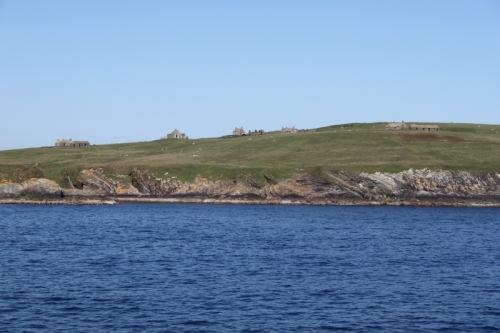
When we arrived at St Margaret's Hope the temperature was a balmy 22 degrees  . To say we were delighted would be an understatement! St Margaret's Hope is on the Island of South Ronaldsay which is connected to the Orkney mainland by the Churchill Barriers. After grabbing a delicious crab sandwich in the local cafe we headed off on our tour taking in The Churchill Barriers, a series of four causeways, which were built in the 1940s primarily as naval defences to protect the anchorage at Scapa Flow. You can still see remnants of WWII naval vessels and as a result this area is very popular with divers who relish exploring the wrecks off shore. . To say we were delighted would be an understatement! St Margaret's Hope is on the Island of South Ronaldsay which is connected to the Orkney mainland by the Churchill Barriers. After grabbing a delicious crab sandwich in the local cafe we headed off on our tour taking in The Churchill Barriers, a series of four causeways, which were built in the 1940s primarily as naval defences to protect the anchorage at Scapa Flow. You can still see remnants of WWII naval vessels and as a result this area is very popular with divers who relish exploring the wrecks off shore.

Next on our tour was the lovely, tranquil Italian Chapel, built by Italian POWs during WWII. The chapel was constructed from scrap metal and junk. Considered a poignant symbol of peace and goodwill it is one of Orkney's most loved tourist attractions. 
A quick stop off to admire The Brough o' Birsay which is a small uninhabited island off the north west coast. The island is accessible on foot at low tide via a largely natural causeway. You can also enjoy a stunning walk along the coastline from here. Sadly we didn't have enough time to experience this  . . 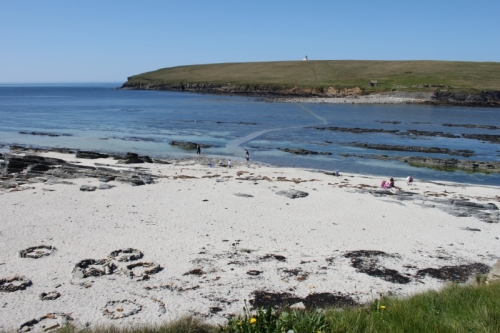
Ring o' Brodgar was our next port of call. If one iconic site has come to represent Orkney's ancient heritage, it must surely be the Ring o' Brodgar. This impressive circle of upright stones with an enclosing ditch spanned by causeways, dates back to late Neolithic times and is definitely worth a visit.
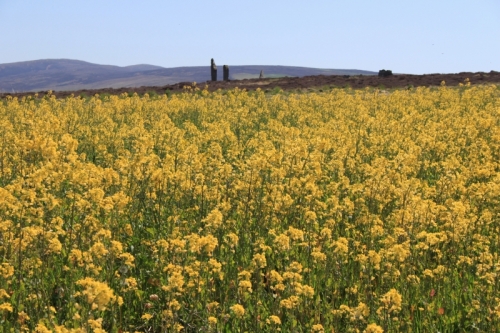
With so little time we made a fleeting visit to Scara Brae, Stromness and Kirkwall before starting the next leg of our Orkney adventure. In Kirkwall we visited St Magnus Cathedral. Known as the 'Light in the North' , Britains most notherly cathedral was founded in 1137 by the Viking, Earl Rognvald, in honour of his uncle St Magnus. The cathedral is owned by the people of Orkney and is an inspiring, peaceful place and not to be missed if you are in Kirkwall.

Check out my next blog which will feature the wild, wonderful and welcoming Westray!
|
Posted: Monday 23 April 2012
-
2 comment(s)
[ Comment ]
-
0 trackback(s)
[ Trackback ]
On Sunday we took a wee trip over to Fife to have lunch with good friends in Kincardine. En route we passed by one of my favourite places to explore in the area, Culross, and I was reminded of a great day out we spent there some time ago. Culross, pronounced "Coo-ros", (Gaelic: Cuileann Ros) is a former royal burgh and visiting this picturesque small town on the Firth of Forth, with its collection of wonderfully preserved 17th Century buildings, cobbled streets and narrow wynds, gives the impression that you have stepped back in time. It is a fascinating place to visit with lots of interesting sites to marvel at and enjoy and is one of the real hidden gems in the Kingdom of Fife. It is believed to have been founded by Saint Serf during the 6th century. 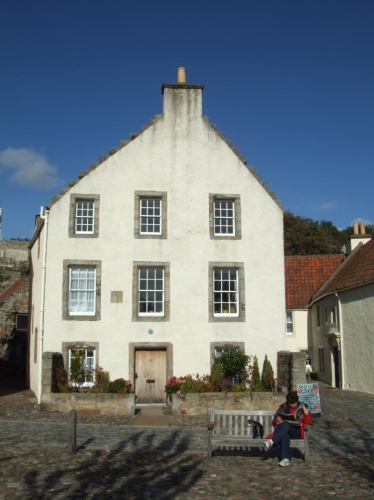
The remains of Culross Abbey are certainly worth exploring and have a wealth of history attached to them. The Abbey was founded in 1217 by Malcolm, 3rd Earl of Fife and was originally a Cistercian monastery. Part of the Abbey is still used as the present parish church. While we were there we enjoyed the peace and tranquility of the beautifully tended walled garden which we happened upon by chance while walking up to the abbey. 
Culross Palace is a striking introduction to this small royal burgh. Built by Sir George Bruce, a wealthy merchant, between 1597 and 1611 it is beautifully preserved with original interiors with painted woodwork and a decidedly distinctive exterior. The lovely little palace gardens are bursting with herbs, fruit and vegetables all of which are available for visitors to buy when in season. The gardens offer spectacular views over the town and across the Forth. 
I made a promise to myself to revisit Culross this summer .
|
Posted: Thursday 12 April 2012
-
2 comment(s)
[ Comment ]
-
0 trackback(s)
[ Trackback ]
I spent a lovely Easter weekend with lovely friends in Seamill. As I did a blog about Seamill and Portencross a few weeks ago I thought I'd dedicate this blog to another of my favourite places in Ayrshire, the west coast town of Largs. Located on the Firth of Clyde, Largs, evolved into a busy seaside resort in the 19th century. With spectacular scenery of islands to the west and rolling hills and countryside to the east, Largs remains a popular holiday destination year in year out. The name "Largs" is derived from the Gaelic 'learg' meaning grassy slope and is perhaps best known for its Viking links. Largs beach is mostly shingle with a little sand but is still a favourite with families throughout the summer months who come to enjoy lazy days, picnics and sunbathing. The Gulf Stream, which runs from the Gulf of Mexico, is supposed to end here and this could be the reason why Largs and other Ayrshire coastal towns normally have relatively mild winters. 
Largs' most famous monument is The Pencil, situated at the south end of the Prom, near to Largs Marina. The Pencil was built in 1912, to commemorate the Battle of Largs in 1263, the most significant military conflict of the Scottish-Norwegian War. King Hakon Hakonsson had decided that he wanted to conquer Scotland, having been challenged by Alexander III who wanted to take back the coastal areas that were under Norwegian control. The outcome was ambiguous but in the long-term was to be to the Scots advantage. The result being that Scotland was from then on free from Viking domination. Largs prides itself on its Viking connections and holds a week-long Viking Festival annually with a fireworks extravaganza held at The Pencil marking the end of the festival. 
Largs Marina boasts an outstanding location in beautiful sheltered sailing waters and provides excellent facilities, making it one of Scotland's most popular marinas. The Clyde has long been a favourite area of sailers and yachtsmen and Largs Marina is a great starting point for sailing out to the nearby islands for a scenic day cruise, or heading further afield for more challenging waters as Ireland is only a day away. The Isle of Great Cumbrae, Kyles of Bute, Arran and Troon are all within easy reach. Each destination offers spectacular coastal scenery, abundant wildlife and birdlife, sheltered coves, sandy beaches, historical sites, quaint fishing villages and harbours. 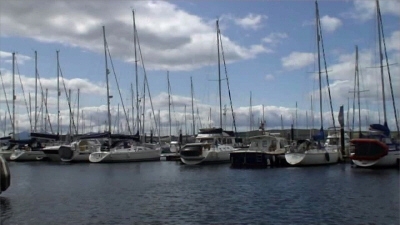
Away from the hustle and bustle of the town centre you can enjoy a quiet stroll along the promenade and around the shingle bay. Largs is home to Nardini's, an Italian ice-cream parlour housed in a fabulous Art Deco building. It has recently been restored to its former glory after a refurbishment. You can peek through the ice cream factory window as top gelato chefs prepare fabulous new flavours and with a choice of 32 ice-cream flavours you won't go home hungry. 
I indulged in some Rum & Raisin ice cream...yummy . Well, it would have been rude not to .
|
Posted: Wednesday 28 March 2012
-
3 comment(s)
[ Comment ]
-
0 trackback(s)
[ Trackback ]
This afternoon I received a photo via text from my Mum of Kailzie Gardens. She and my Dad are spending a few days touring around the Borders. Scotland is basking in sunshine this week, infact I think it's been the hottest March on record, so they couldn't have picked a better week for their holiday. The photo reminded me of my trip to Peebles with them this time last year when we discovered these lovely gardens. Situated about 2 miles outside Peebles, the gardens are an oasis of calm with spectacular views of the beautiful Tweed Valley. 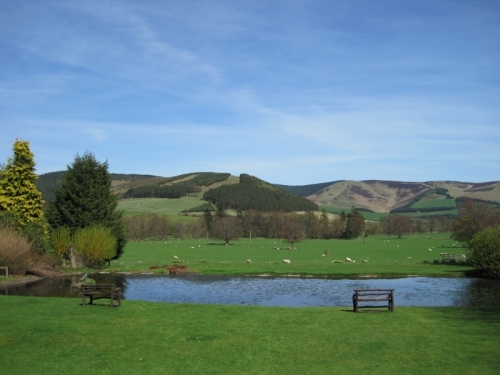
When we were there we enjoyed a gentle stroll around the gardens exploring a number of woodland & burnside walks where we marvelled at the variety and colour of the spring flowers including daffodils, snowdrops, bluebells, rhododendrons & azaleas. There are a number of ancient trees scattered around the grounds including an old larch tree which was planted in 1725 and may be the oldest Larch tree in Scotland. 
We particularly enjoyed wandering around the walled garden which dates from 1812. Surrounded by a magnificent 18ft high wall this stunning place houses a lovely Herbaceous Border, The Laburnum Walk and a formal Rose Garden. The greenhouse was filled to bursting with a variety of plants and the heavy scent of an old Wisteria hung in the air. 

The River Tweed and the burn that flows through the garden provide a rich habitat for birds such as the Kingfisher, Heron, Oyster Catcher, Wagtails and Dippers. Other wildlife to keep an eye out for are red squirrels and roe deer. 
Kailzie Gardens is a major partner in the highly successful Tweed Valley Osprey Project which has helped attract and protect these glorious birds of prey after an absence of more than 100 years. There is opportunity to watch the Ospreys in their natural habitat in the Tweed Valley Forest Park by way of live CCTV cameras. A rare glimpse into the lives of these engaging raptors. 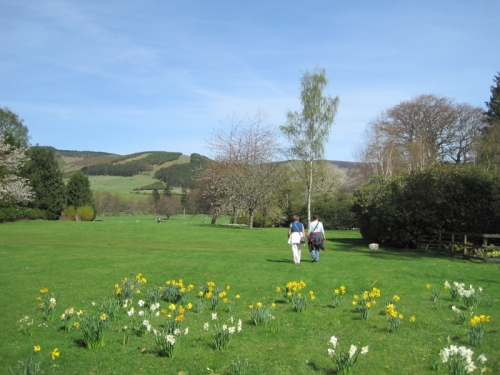
We'd worked up quite an appetite after all our exploring and enjoyed a veritable feast in the restaurant which has been loving converted to retain as many of the original features as possible. It is situated in the old Stable Square and serves a wonderful choice of home-made goodies. To round off our day at Kailzie we had fun on the 18 hole putting green .
|
Posted: Wednesday 21 March 2012
-
2 comment(s)
[ Comment ]
-
0 trackback(s)
[ Trackback ]
I spent the weeknd in my beloved Highlands with my beloved parents enjoying the superb scenery and the clear, clean fresh air. I wanted to take a wee trip to Glen Feshie because I love the scenery around there and the weather was glorious so I knew there would be some fantastic photo opportunities to be had. We took the scenic route, the B9152 (I think) between Kingussie and Aviemore (I have to say this stretch of road is one of my all time favourites). I have travelled this road hundreds of times but I never tire of the stunning views which are ever changing with the seasons. 
Glen Feshie, a U-shaped valley separating the Cairngorm mountains from the hills lower down to the east, is a remote area of outstanding natural beauty surrounded by fields, forests and mountain peaks. Close to the Highland village of Kincraig, it boasts scenic walking trails through Scots pine and conifer woodland and opportunities for fishing, mountain biking, picnics and paddling by the banks of the River Feshie. For more ardent walkers there are two Munros, Sgor Gaoith and Mullach Clach a'Bhlair, just waiting to be climbed and the views of this glacial valley from their summits are breathtaking. 
My sister had told me about a recent discovery she'd made, a sculpture trail located near Feshiebridge, which has become her favourite place to take my nephews to visit. Feshiebridge is a peaceful hamlet set amidst fields and forests with the River Feshie cascading over large black boulders making its way to the River Spey. There are some lovely woodland and river walks in the area and you can always have a refreshing dip in the river if you're feeling brave enough. 
The Frank Bruce Sculpture Trail, set in the beautiful Inshriach Forest, showcases 12 thought-provoking wood and stone sculptures by the late artist. The one mile trail is suitable for all ages and stages and is a delightful voyage of discovery through woodland and an old walled garden. This is a truly unique setting for his original art and you can't fail to be drawn in by the sculptures and their descriptions. A gem of a place and definitely worth a visit. 

We finished off a great day out by stopping off at The Potting Shed at Inshriach Nursery . This cosy tearoom serves delicious homemade cakes which you can enjoy with a cuppa whilst watching, from a viewing gallery, the local wildlife (including red squirrels and numerous birds) enjoying their very own food-fest.
|
Posted: Monday 5 March 2012
-
7 comment(s)
[ Comment ]
-
0 trackback(s)
[ Trackback ]
Recently we took a detour whilst on our way to Renfrewshire to pay a visit to the pretty coastal village of Seamill. Located in North Ayrshire, Seamill is named after one of its oldest buildings, the Sea Mill, a grain watermill which featured in Johannes Blaeu's "Atlas of Scotland" published in Amsterdam in 1654. Seamill became a celebrated summer resort in late Victorian times with visitors taking advantage of the hydro therapies on offer and often leaving with health restored and vigor renewed. 
The area is a great place for recharging your batteries and you can enjoy exhilarating swimming in the sea, watersports, invigorating coastal walks and breathtaking views to the Isle of Arran, especially from the nearby Ardneil Bay. 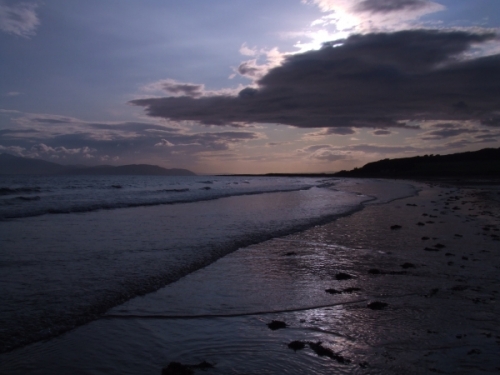
One of our favourite things to do whilst in the area is to walk along the coastal path from Seamill to the delightful hamlet of Portencross enjoying the stunning views across the Firth of Clyde to the Isle of Arran. Portencross is home to a 14th century castle which perches on a rocky promontory and is believed by some to have been a royal residence, as evidence shows that several charters of the first two Stuart kings were signed at the castle. The castle has recently undergone a dramatic restoration thanks to the efforts of local residents who set up a charitable company to raise funds in order to protect the future of the castle. Portencross also has two Medieval fishing harbours and a semi-derelict 19th century pier. A lovely little place and well worth visiting. 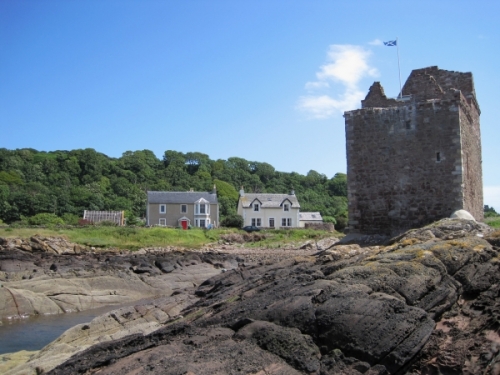
Seamill forms part of the Ayrshire Coastal Path which runs for 100 miles from Glenapp to Skelmorlie along one of the finest panoramic coastlines in Britain. Features of the route include stunning beaches, rocky shores, craggy cliff tops, abundant wildlife and birdlife, historical sites and picturesque fishing villages.

Seamill is definitely worth a visit in any season .
|
Posted: Wednesday 29 February 2012
-
5 comment(s)
[ Comment ]
-
0 trackback(s)
[ Trackback ]
Situated in the very heart of Scotland, Perthshire is an area of gentle glens, rolling hills, rugged mountains, tranquil lochs, mature woodland, roaring rivers and fertile farmland. Regarded by many as a celebration of the great outdoors, Perthshire offers a host of activities to suit young and old alike. From adrenaline pumping white water rafting and canyoning to inspiring wildlife safaris, from kayaking and canoeing on spectacular lochs to exploring ancient oak forests, from scaling magnificent mountain peaks to photographing nature at its best, from fishing on the banks of mighty rivers to discovering its rich historic sites, from sleepy hamlets to bustling towns, Perthshire has it all. We took a trip to the delightful Victorian town of Pitlochry earlier in the week which has been a popular tourist destination for over 100 years. We were keen to make the most of the mild spring weather and headed off on a wee jaunt North. Set amidst beautiful scenery it is no surprise that the town attracts floods of tourists every year. The area is packed with lots to see and do. Aside from shopping, sampling tasty local treats and exploring the area's rich heritage, there are numerous walks on offer with an integrated network of well-signposted forest trails and designated mountain bike routes. More ardent hill walkers will rise to the challenge of scaling the surrounding mountains such as Ben Vrackie and Schiehallion. Pitlochry is home to two whisky distilleries - the Bell's Blair Athol Distillery and the Edradour Distillery which is the smallest whisky distillery in Scotland, producing a mere 12 casks of whisky a week! 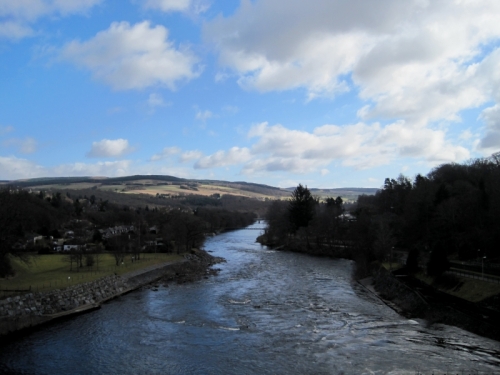
We always enjoy a walk to Loch Faskally which was formed when the Tummel valley was dammed for the hydro scheme at Pitlochry. It is the last of the dams in the hydro scheme and at its base sits a major power station. One of Pitlochry's best-loved attractions is the fish ladder which is built into the dam. There is a public gallery where, usually in May and June, visitors can watch as the salmon negotiate the specially constructed ladder which allows them to bypass Pitlochry Dam and reach the man-made Loch Faskally. It is believed around 5400 salmon ascend the dam each year. Impressive! 
Another great day out in another great part of Scotland .
|
Posted: Monday 30 January 2012
-
4 comment(s)
[ Comment ]
-
0 trackback(s)
[ Trackback ]
It's hard to believe that we are still in the winter month of January. On Saturday the skies were blue, the sun was shining and the weather was positively mild and wind free . Could this really be Scotland in January? There is a section of the John Muir Way in North Berwick which we just love and at every opportunity we like to head down the coast to soak up the sea air and spend a couple of hours walking. The trail skirts around North Berwick Golf Course before heading down into sandy coves and rocky outcrops offering wonderful views out to the Bass Rock. Often we are the only people on the beaches which is a real bonus. I love collecting sea glass which can be found in abundance on several of the beaches. I always have great plans about what I'm going to make with my booty but to date it still sits in a glass jar waiting for my creative spark to ignite  ! All suggestions gratefully received! ! All suggestions gratefully received! 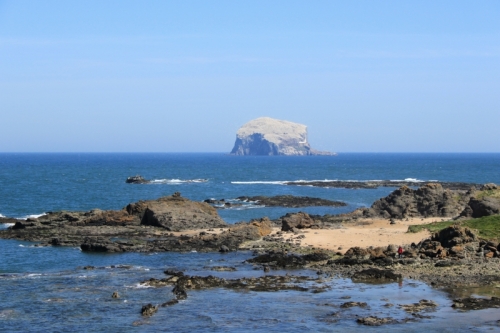
As we looked out the the Bass Rock a microlight was hovering above it and this brought back memories from a few years ago when I did just that. An absolutely terrifying  (I'm not too keen on heights) but at the same time exhilarating experience. I can thoroughly recommend it so if you're interested check out East of Scotland Microlights who offer a variety of flights and are based at East Fortune Airfield. (I'm not too keen on heights) but at the same time exhilarating experience. I can thoroughly recommend it so if you're interested check out East of Scotland Microlights who offer a variety of flights and are based at East Fortune Airfield. 
The charming seaside town of North Berwick in East Lothian became a fashionable holiday destination in the 19th century mainly due to its two lovely sandy bays. However, the town still attracts holiday makers to this day keen to enjoy the bracing sea air, play the challenging golf courses, walk the spectacular coastal paths, explore the historic ruins and picnic on the beautiful sandy beaches. Visitors can learn more about the seabird colonies who live on the nearby Bass Rock and Fidra Island by visiting the Scottish Seabird Centre which is located in the town. Robert Louis Stevenson spent many childhood holidays here and returned to holiday here as a young man. Fidra Island is said to be the original inspiration for "Treasure Island" and much of his novel "Catriona" (the sequel to "Kidnapped") is based in this area. 
Heading back into North Berwick we were surprised at how busy the town was. It seemed that every available coffee shop was packed out and we were worried that we weren't going to get our much needed refreshments . Our favourite spot is The Orangery Cafe located in the Westgate Gallery which serves yummy food in a lovely relaxing environment. Thankfully after only a short wait we were tucking into homemade scones and steaming hot coffee.
|
Posted: Monday 23 January 2012
-
4 comment(s)
[ Comment ]
-
0 trackback(s)
[ Trackback ]
We took a wee trip to Gosford Estate near Aberlady in East Lothian at the weekend because it's been a while since we were there. We love walking through the gardens at different times of the year because they are ever changing with the seasons. We always end up at the cafe for cake and coffee which is a tasty addition to any afternoon walk . Gosford Bothy Farm Shop which is attached to the cafe sells produce from the estate and locally sourced quality goods. Foodies will marvel at the array of delicious food on offer just waiting to be purchased. 
Gosford Estate was purchased by the Wemyss-Charteris family in 1781. The beautiful, historic house is open to the public during the summer months. The "secret" gardens are open all year round and permits to explore this magical place can be purchased nearby and cost just £5 for one year. Now that's what I call a bargain . Our friends introduced us to Gosford a few years ago and we were absolutely enchanted right from the start. The gardens are charming and so peaceful and work has been carried out recently to restore the paths and the ponds. There are a number of interesting buildings close by the ponds, including the Curling House and the Ice House. 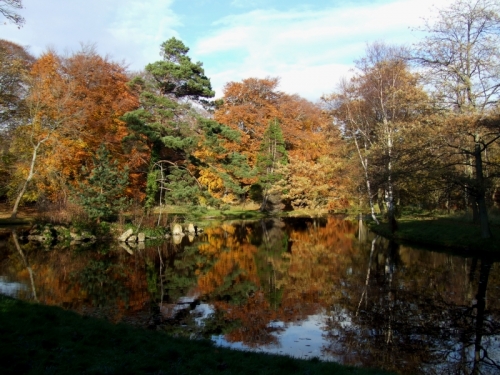
The photos in this blog weren't taken on this trip but were taken in the autumn. Autumn is a wonderful time to visit when the many trees surrounding the ponds are shedding their colourful leaves creating spectacular scenes all around. 
Gosford is one of those special places that we don't visit often enough. Hopefully this year will be different .
|
Posted: Monday 9 January 2012
-
5 comment(s)
[ Comment ]
-
0 trackback(s)
[ Trackback ]
While I was in Easter Ross for New Year my friends and I took a wee trip to Portmahomack. This remote fishing village on the Tarbat Peninsula is a popular tourist destination with a lovely traditional harbour and a beautiful isolated beach where you can take a dip if you're feeling brave enough. This is an area where you can spot dolphins, whales, seals and numerous seabirds whilst exploring the dramatic rocky coastline. An excellent coastal circuit of the Tarbat Ness headland is a must and we'd like to return here in the summer to experience it. Watersports, fishing and golf are activities you can also enjoy whilst in the area. Portmahomack is the site of the first confirmed Pictish monastery and the subject of one the largest archaeological investigations in Scotland between 1994 and 2007. There is evidence of early settlements and significant signs of activity during the time of the Picts and the Vikings. Some important Pictish carved stones discovered here are on display in the Museum of Scotland in Edinburgh. 
As the wind howled about us and threatened to freeze all our extremities we made our way to Tarbat Ness Lighthouse. The lighthouse is located at the North West tip of the Tarbat Ness peninsula. It was built in 1830 by Robert Stevenson and has an elevation of 53 metres (174 ft) and 203 steps to the top of the tower  . The lighthouse tower is the third tallest in Scotland behind North Ronaldsay and Skerryvore and is well-known for having two distinguishing broad red bands. The lighthouse is a site of special scientific interest and its location makes it an important landfall for migrating birds, particularly those from Scandanavia. . The lighthouse tower is the third tallest in Scotland behind North Ronaldsay and Skerryvore and is well-known for having two distinguishing broad red bands. The lighthouse is a site of special scientific interest and its location makes it an important landfall for migrating birds, particularly those from Scandanavia. 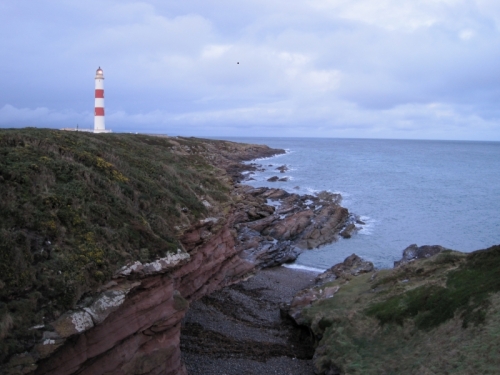
Finally the biting winter wind forced us back to the car and we headed home for coffee and cake .
|
Posted: Wednesday 4 January 2012
-
2 comment(s)
[ Comment ]
-
0 trackback(s)
[ Trackback ]
What better way to spend Hogmanay than with good friends, enjoying fresh Highland air and finding oneself immersed in new, beautiful surroundings. Low and behold that's what happened to me. We decided to have a helping of exercise before spending the evening indulging in a spot of good food and drink and seeing in the start of 2012. There was an opening in the weather which had been pretty wet and dreich and so we decided to go for it. 
We headed to Glen Glass near Evanton. I'd never been to Glen Glass before but immediately fell in love with its peacefulness and stunning beauty. You feel you are in Scotland's last great wilderness here surrounded by mountains, forests, lochans, moorland and raging rivers. The highlight of the walk for me, well apart from Ian sliding down a vertical snowy slope and ending up with a very wet behind, was spotting a solitary deer hiding in the forest. 
The area is popular with hill walkers and there are a few Grahams to be bagged. No, Grahams are not some local lads...The Grahams are those mountains in Scotland with heights between 2000 m (610 m) and 2499 m (761 m). Originally known as Elsies ('LCs' or Lower Corbetts), the 224 peaks were renamed in memory of Fiona Torbet (nee Graham) who published her own list of these peaks in the early 1990s. 
After a fab walk through some truly breathtaking scenery we headed back to begin our Hogmanay celebrations.
|
|
|


)